
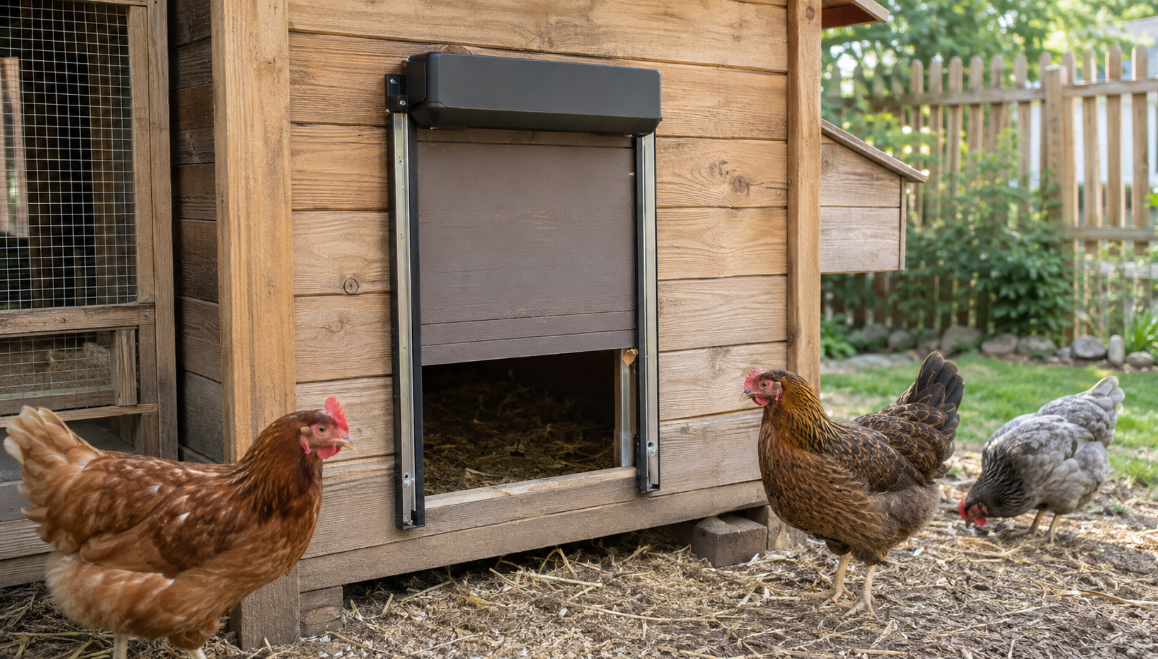
Automatic Chicken Coop Door Not Closing: Causes and Fixes
An automatic chicken coop door that will not close is more than an inconvenience. If the door stays open after dark, predators may have a direct path into the coop. If it closes partway and jams, chickens can be left outside, trapped in the doorway, or exposed to cold weather.
Start with safety, then troubleshoot the door.
If this is happening at night, secure the flock and coop first. Manually close the pop door if you can, block the opening with a temporary predator-resistant panel, or move the birds to a secure space until morning. Do not spend twenty minutes testing sensors while the coop is open after dark.
This guide covers the most common reasons an automatic chicken coop door does not close, including blocked tracks, weak batteries, timer and light sensor problems, ice, wiring issues, and motor faults. The advice is intentionally general. For model-specific resets, calibration steps, error codes, or replacement parts, use the manufacturer manual for your exact door.
Quick checklist: what to check first
If your automatic coop door is stuck open or only closes partway, work through these in order:
- Secure the coop manually if predators, darkness, or bad weather are a concern.
- Look for a physical blockage in the rails, track, doorway, cord, or lower edge.
- Check whether a chicken is blocking the door or refusing to go inside.
- Replace or recharge the batteries if the door is battery-powered.
- Confirm the door is in automatic mode, not manual, setup, hold-open, or calibration mode.
- Check timer settings, especially after daylight saving time, power loss, or battery changes.
- Inspect the light sensor for dirt, shade, coop lights, porch lights, or flashlight interference.
- Look for ice, swelling wood, mud, or bedding buildup around the door opening.
- Run a manual open/close cycle and listen for grinding, slipping, clicking, or motor strain.
- Check the manual before resetting, forcing the door, lubricating parts, or replacing components.
If the door closes normally by manual button but not automatically, the issue is probably settings, timer, light sensor, app schedule, or power behavior. If it will not close even manually, suspect a jam, low power, cable/track problem, motor fault, or damaged door panel.
1. The track or doorway is blocked
This is the most common and most fixable cause. Automatic coop doors do not need a large obstruction to fail. A small clump of bedding, frozen mud, feather, screw head, warped wood edge, or pine shaving buildup can be enough to stop a lightweight sliding panel.
Check for:
- bedding packed into the lower track
- dust and feathers in side rails
- mud around the threshold
- screws protruding into the door path
- a misaligned door frame
- a warped wooden mounting surface
- a cord, latch, feeder, or ramp interfering with the door
- a chicken sitting in the doorway at dusk
Clean the track and threshold, then run the door manually through a full open-and-close cycle. Watch the door from the side. It should move freely without scraping, tilting, binding, or catching near the bottom.
Avoid forcing the motor repeatedly against a jam. That can drain batteries and may damage gears, strings, panels, or the control unit depending on the design.
2. The batteries are weak
Weak batteries can cause confusing symptoms. The door may open in the morning but fail to close at night. It may move partway, stop, beep, flash an error, or act normally when tested once but fail under load.
Battery performance can also drop in cold weather. A door that worked all summer may become unreliable during freezing nights, especially if batteries are old or the door has to push against ice, dirt, or a sticky track.
Try this:
- replace disposable batteries with fresh batteries of the type recommended by the manufacturer
- recharge removable rechargeable batteries fully, if your model uses them
- check battery orientation and clean contacts
- inspect for corrosion in the battery compartment
- confirm the battery cover is seated properly and protected from moisture
- reset the low-battery warning only if the manual says to do so
Use the battery type recommended by the door manufacturer. Some devices do not behave well with the lower voltage profile of certain rechargeable AA batteries unless the manufacturer specifically supports them.
For winter-specific buying and setup notes, see our related guide: Best Automatic Chicken Coop Doors for Cold Weather.
3. The door is in the wrong mode
Many automatic coop doors have multiple modes: timer, light sensor, manual, app control, calibration, setup, vacation mode, open-hold, or mixed timer-plus-light behavior. If the door is not closing automatically, confirm it is actually set to close automatically.
This often happens after:
- installing the door for the first time
- changing batteries
- testing the door during the day
- adjusting the close time
- switching between timer and light sensor modes
- using an app or remote control
- updating settings and not saving them
Look for a display icon, app status, indicator light, or menu setting that confirms the active mode. If your door has separate open and close settings, check both. Some doors allow timer opening but light-sensor closing, or the reverse.
4. Timer settings are wrong
A timer-based door only closes when its internal clock and close schedule tell it to. If the time is wrong, the door may close too late, too early, or not during the window you expect.
Common timer problems include:
- the clock reset after batteries died
- AM/PM was set incorrectly
- daylight saving time changed
- the close time was accidentally disabled
- the app schedule did not sync
- the time zone is wrong in the app
- a weekday/weekend schedule is different
- the door was left in manual mode after testing
Do not assume the timer is correct because it worked last month. Check the current time in the control unit or app, then confirm the programmed close time.
A practical close time is usually after the flock has gone in, but not so late that the coop sits open deep into the evening. Chickens often enter near dusk, but habits vary by season, breed, weather, and coop lighting.
5. The light sensor is confused
Light-sensor doors close based on light level, not human clock time. That can work well, but sensors can be fooled by installation location and artificial light.
The door may not close if the sensor is exposed to:
- porch lights
- floodlights
- coop interior lights
- streetlights
- vehicle headlights
- security lights
- a flashlight during evening checks
- reflected light from snow or pale surfaces
The door may also behave strangely if the sensor is:
- covered in dirt, dust, cobwebs, or frost
- mounted in deep shade
- pointed toward a bright window or artificial light
- blocked by a roof overhang or hardware cloth
- receiving inconsistent light compared with the actual outdoor dusk level
Clean the sensor gently and check the manual for sensitivity settings or delay settings. Some light-sensor doors wait a set amount of time after dusk before closing, which helps late chickens get inside. Others allow adjustment so the door closes at a darker or brighter threshold.
If this becomes a recurring issue, a timer mode or timer-plus-light setup may be more predictable. We plan to cover this more directly in Automatic Coop Door Light Sensor Problems.
6. Ice, snow, or frozen bedding is stopping the door
Winter problems deserve special attention. Even a door designed for outdoor use can struggle if the moving parts are blocked by ice or frozen debris.
Check the lower edge, side rails, and area outside the coop for:
- snow piled against the door
- frozen bedding at the threshold
- ice in the track
- frozen mud around the ramp
- frost on the door panel
- water dripping from the roof and refreezing
- a door panel frozen to the frame
Clear the obstruction without bending the door panel or forcing the motor. If water is dripping onto the door, fix the source of the moisture if possible. A small roof overhang, better drainage, or a cleaner threshold may prevent repeated freezing.
Be careful with lubricants. Some can collect dust, gum up in cold weather, damage plastic, or conflict with manufacturer guidance. Check the manual before spraying anything into a track or motor housing.
7. The door is misaligned
Automatic doors need smooth travel. If the frame is crooked, the mounting surface has shifted, or the coop wall swells with moisture, the door may bind near the top or bottom.
Signs of alignment trouble:
- the door scrapes on one side
- the panel tilts as it moves
- it closes partway and stops at the same spot
- it works when loosened but not when fully mounted
- screws have shifted or pulled from the coop wall
- the door frame is no longer square
This is common on wooden coops because wood expands, contracts, warps, and settles. Check that the rails are parallel and the door opening is square. If needed, loosen the mounting screws slightly, realign the frame, and retighten according to the manufacturer instructions.
8. Safety or obstruction detection is stopping the close cycle
Some automatic coop doors include obstruction detection, anti-crush behavior, load sensing, reversing, alarms, or retry cycles. These features vary by model, so do not assume every door behaves the same way.
If your door starts to close, stops, reverses, or retries, it may be detecting resistance from:
- a chicken in the doorway
- packed bedding
- a sticky rail
- ice
- a bent panel
- a ramp pressing against the door
- mounting screws or hardware in the door path
Treat repeated safety stops as a clue, not an annoyance to bypass. Find out what the door is hitting. Do not disable safety features unless the manufacturer specifically instructs you to for a diagnostic step, and only when birds are away from the opening.
9. The motor, cable, gear, or panel may be damaged
If the door has power, settings are correct, and nothing is blocking it, the problem may be mechanical or electrical.
Possible signs include:
- clicking without movement
- grinding noises
- a motor that runs but the panel does not move
- a frayed lifting cord
- a door panel off its track
- stripped gears
- cracked plastic parts
- water inside the control box
- repeated error lights after reset
At this point, use the manual for your exact model. Look for troubleshooting tables, error-code meanings, warranty instructions, replacement parts, and support contact information. If the door is still under warranty, contact the manufacturer before opening sealed electronics or modifying parts.
10. Chickens are not going inside before the door closes
Sometimes the door is closing correctly, but the flock is not cooperating. Young birds, newly moved hens, nervous birds, or chickens adjusting to a new coop may linger outside after the door schedule starts.
If birds are being left outside:
- train them to return to the coop at dusk before relying on automation
- use a later close time temporarily
- check whether the coop is too dark, crowded, hot, or poorly ventilated
- make sure the ramp is easy to use
- check for bullying at the doorway
- avoid placing feed or treats where birds linger outside too long
Automation should support flock habits, not replace evening checks during training. For a new automatic door, monitor the flock for several evenings before trusting it unsupervised.
Troubleshooting by symptom
| Symptom | Likely causes | What to do first | |—|—|—| | Door stays fully open | Timer, light sensor, wrong mode, dead batteries, app schedule | Secure coop, check mode, replace batteries, verify schedule | | Door closes partway then stops | Track blockage, ice, misalignment, obstruction detection | Clean rails and threshold, inspect alignment, run manual cycle | | Motor runs but door does not move | Cable, gear, panel, or connector problem | Stop repeated cycling and check manual/support options | | Door works manually but not automatically | Timer, sensor, app, clock, mode setting | Confirm automatic mode, clock, close time, and sensor placement | | Door closes too late | Light sensor threshold, artificial light, timer setting | Remove light interference or adjust close schedule | | Door works in warm weather but not cold | Weak batteries, ice, frozen debris, stiff movement | Replace batteries, clear ice, improve drainage/weather shielding |
When to replace or upgrade the door
You may not need a new door. Many closing problems are caused by setup, batteries, or debris. But replacement may make sense if:
- the motor or gear system is failing
- the panel is bent or cracked
- the door lacks a usable manual override
- the control unit is unreliable after fresh batteries and reset
- the door is poorly suited to your climate
- predator risk is high and the current setup leaves gaps
- manufacturer support or replacement parts are unavailable
Affiliate disclosure: Coop Automation Lab may earn a commission if you buy through links on this page, at no extra cost to you. We only recommend products based on research, specifications, owner feedback, and practical backyard chicken-keeping needs.
If repeated failures suggest replacement is the better option, compare current designs in our best automatic chicken coop doors buyer’s guide. If winter reliability is the main issue, also review our cold-weather automatic coop door guide.
Prevent the problem from happening again
A little routine maintenance prevents many closing failures.
Try this schedule:
- Weekly: check the track, lower edge, ramp, and doorway for bedding, feathers, mud, and loose hardware.
- Monthly: test manual open and close, check batteries or charge status, and confirm timer/app settings.
- After storms: look for water intrusion, snow buildup, wind-blown debris, and shifted hardware.
- Before winter: replace weak batteries, improve drainage, check roof drip lines, and make sure the door is not mounted where ice forms.
- After time changes or power loss: confirm the clock and close schedule.
For the first week after installing or reprogramming a door, keep doing evening checks. Once you know your flock reliably goes in and the door closes correctly, automation becomes much more useful.
FAQ
Why is my automatic chicken coop door not closing at night?
The most common causes are a blocked track, weak batteries, incorrect timer settings, wrong operating mode, or light sensor interference from artificial lights. Secure the coop first, then check for physical obstructions before changing settings.
Why does my coop door close halfway and then open again?
It may be detecting resistance or hitting an obstruction. Check for bedding, ice, a crooked frame, a chicken in the doorway, or anything pressing against the panel. Do not bypass safety behavior without checking the manual.
Can cold weather stop an automatic coop door from closing?
Yes. Cold can weaken batteries, stiffen moving parts, and create ice or frozen bedding around the threshold. A door can be outdoor-rated and still fail if the track is physically blocked by ice or snow.
Should I use timer mode or light sensor mode?
Timer mode is predictable, but you may need seasonal adjustments. Light sensor mode follows dusk, but can be affected by artificial light, shade, dirt, or sensor placement. Some owners prefer a combined approach when their door supports it.
Is it safe to leave the coop door open overnight if the run is fenced?
Usually, that is risky unless the entire run is truly predator-resistant on all sides, including the roof and digging protection. Many predators exploit small gaps, weak latches, and hardware cloth mistakes. If the automatic door fails, secure the coop manually when possible.
Should I reset the door?
Only after checking for obvious obstructions, batteries, and settings. If you reset the unit, follow the manufacturer instructions for your exact model. Some doors require recalibration after reset so the controller knows the open and closed positions.
Bottom line
When an automatic chicken coop door will not close, assume predator safety comes first and troubleshooting comes second. Secure the flock, check for physical blockages, replace weak batteries, verify mode and schedule settings, then inspect the light sensor, weather exposure, and alignment.
If the door keeps failing after basic maintenance and manufacturer-guided troubleshooting, it may be time to repair or replace it. A reliable automatic door should close consistently, allow manual backup, and fit your coop’s climate and predator risk.

